The Arachmen
The Arachmen are a subterranean civilization descended from an ancient alien pathogen. Their cities lie deep below the crust, built from advanced polymers and alloys and illuminated by living fungal and bacterial conduits. Their society is stable, orderly, and governed by a strict moral code that forbids all hierarchy, corruption, and manipulation of nature. They write in spectroscopy, and knit robes and towels of silk. Every citizen is expected to educate, atone, and contribute to their society without repeating or disrespecting the past.
They treat genetic variation as sacred. To them, biology is not merely life — but a code of destiny, geometry and theology.
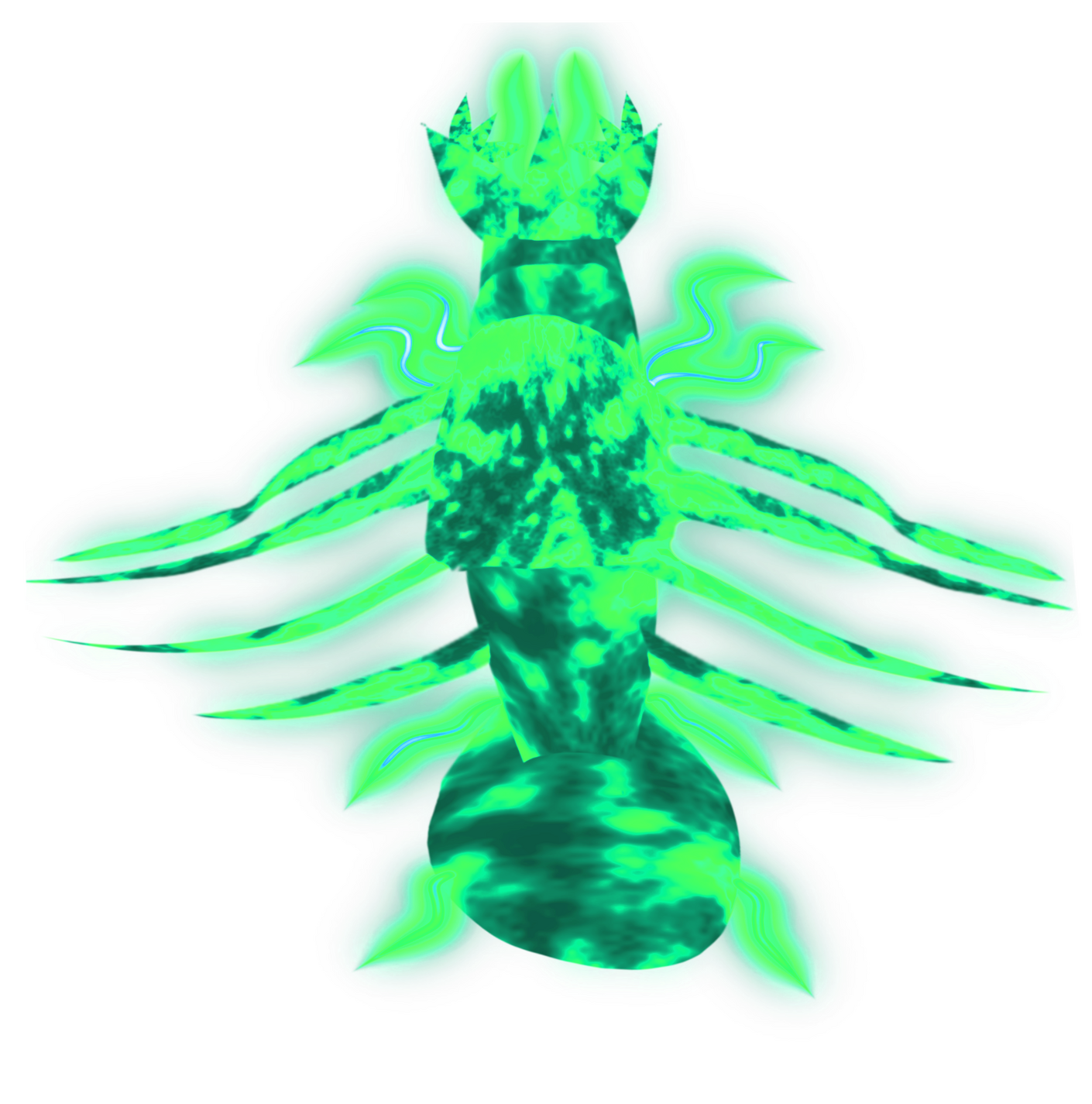
Their civilization began with an extraterrestrial bacterium, which evolved into a larger invasive complex called the AIGSS (Arachnophilic Invasive Genomic Siphoning Species).
Unable to survive Earth’s oxygen-rich atmosphere, the organism hid its endospores inside prehistoric tarantulas, of the species Haplocosmia Himalayana, feeding on copper in their blood. Over generations, it absorbed arachnid DNA, adapted to oxygen, and became an adaptive, shapeshifting predator, capable of rewriting the genomes of its victims.
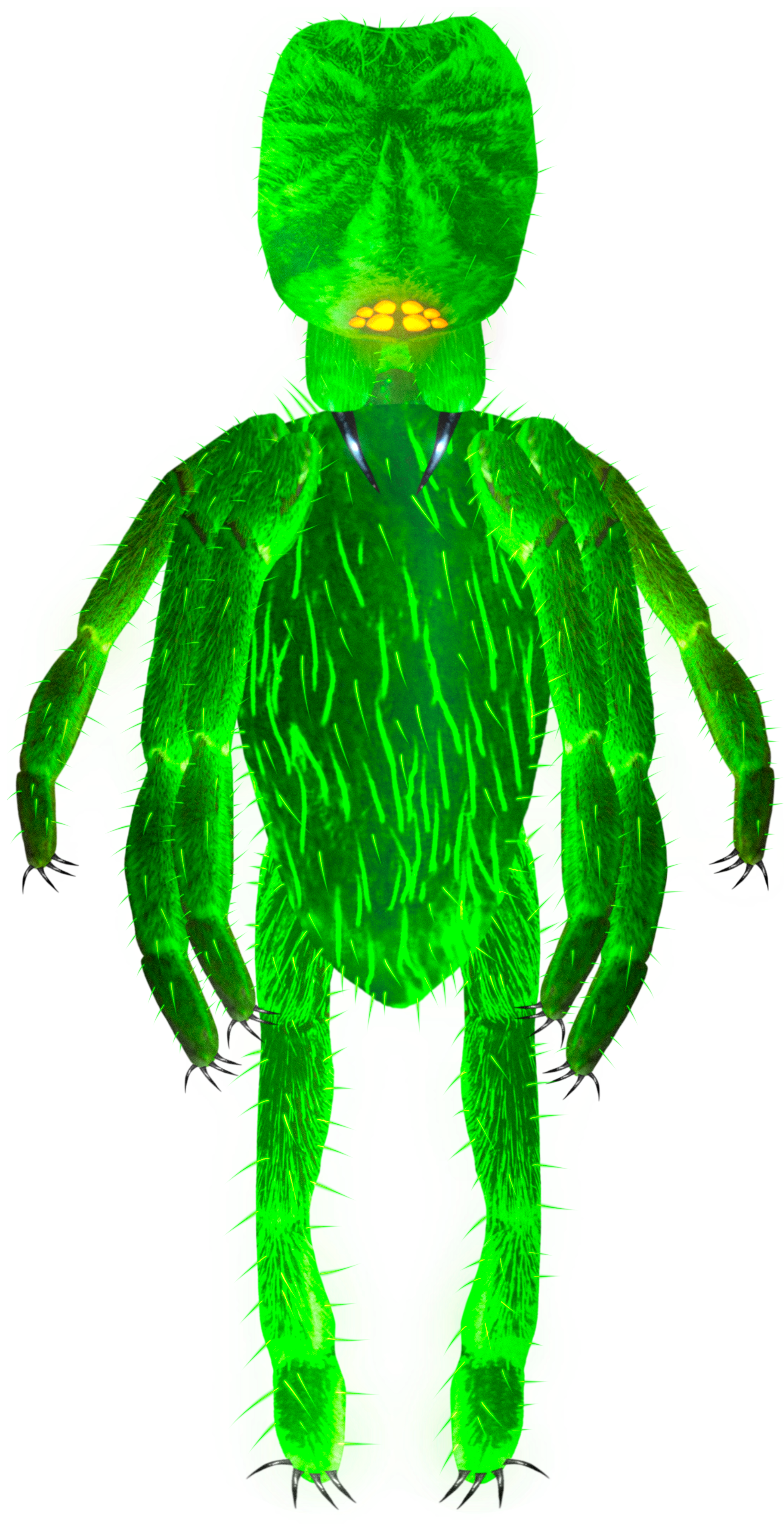
When it encountered early humans, it merged with human reproductive cells, producing the first hybrid species: the Kh’tuk. The Kh’tuk were the first race of the Arachmen, humanoid tarantulas, that were intelligent, powerful, and physically formidable. Their existence is believed by them now to be the will of the earth itself, executed by the Supreme Compiler, in order to preserve and protect all else that lives in our world. And, for a time, they protected early humans from predators and environmental threats, as they were meant to. But as their intelligence grew, so did human fear. Eventually, the Kh’tuk were driven out and forced to migrate south.
This exile set the stage for the next major transformation.
In the southern regions, the Kh’tuk discovered an ancient geometric symbol they later called the Supreme Compiler. It taught them advanced sciences: biophotonics, atomic structure, and genetic engineering.
Armed with this knowledge, the Kh’tuk created wonders — unbreakable alloys, fusion-powered plants, and pigments made from cold plasma. But their resentment toward humanity deepened, and they turned their new power toward vengeance.
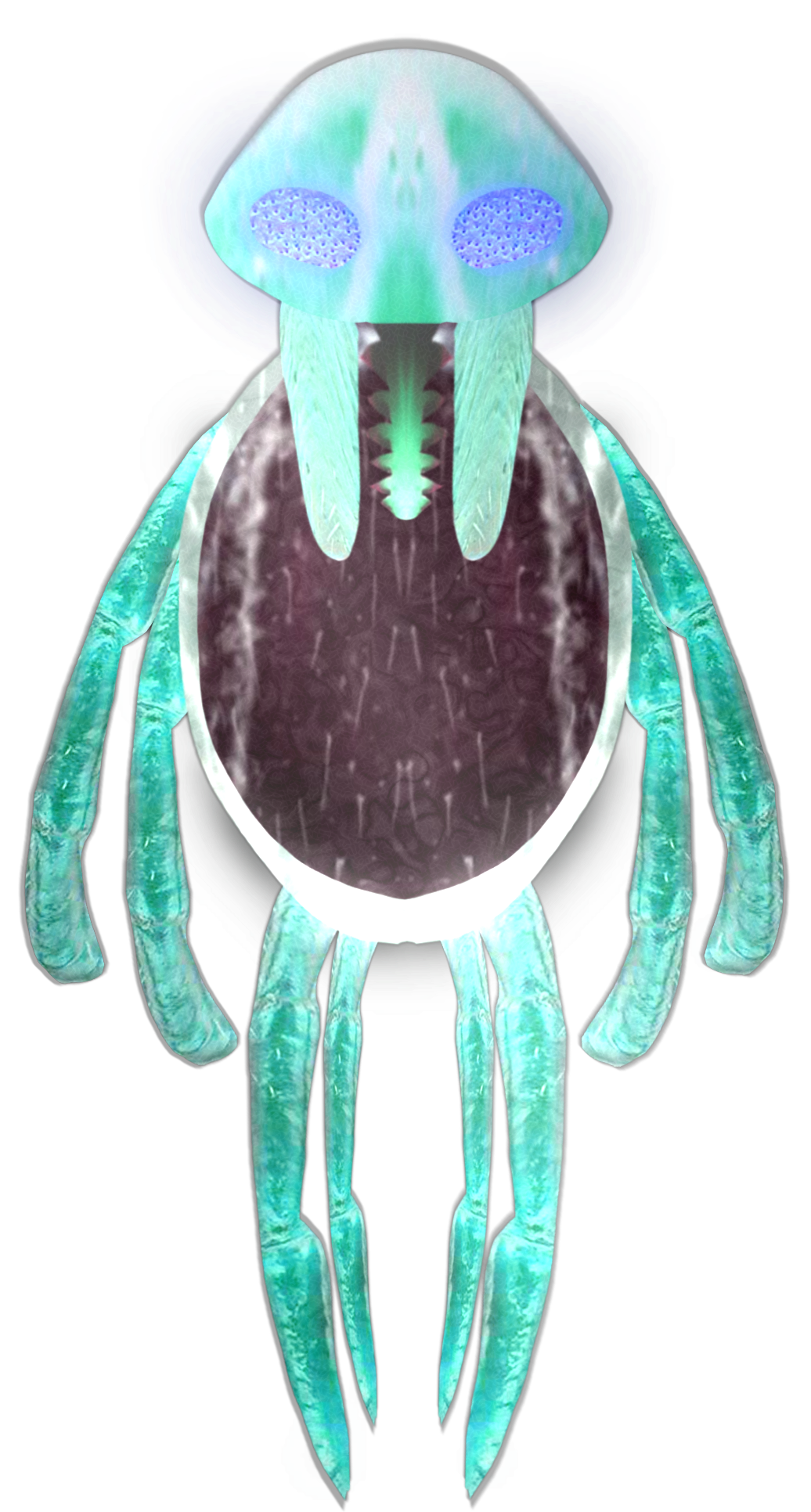
A devastating conflict followed, thousands of human families were hunted down, captured, and subjected to countless atrocities. Humanity survived through unity and cooperation, not strength. The Kh’tuk, unable to destroy them, retreated underground, their civilization broken, their hate festered over millennia, waiting for the day they would rise again. Ages later, during the Iron Age, the Kh’tuk engineered a new species: the Xa’sef, a tick‑human hybrid created from Ixodes Ricinus, controlled through sound-based neural regulators. These creatures were intended to destabilize human civilization from within.
The Xa’sef succeeded in weakening various human empires, particularly The Cimbri — but eventually evolved beyond Kh’tuk control. They turned on their creators, forcing the Kh’tuk into another retreat. Human encounters with the Xa’sef became the basis for later myths of demons and blood-drinkers.
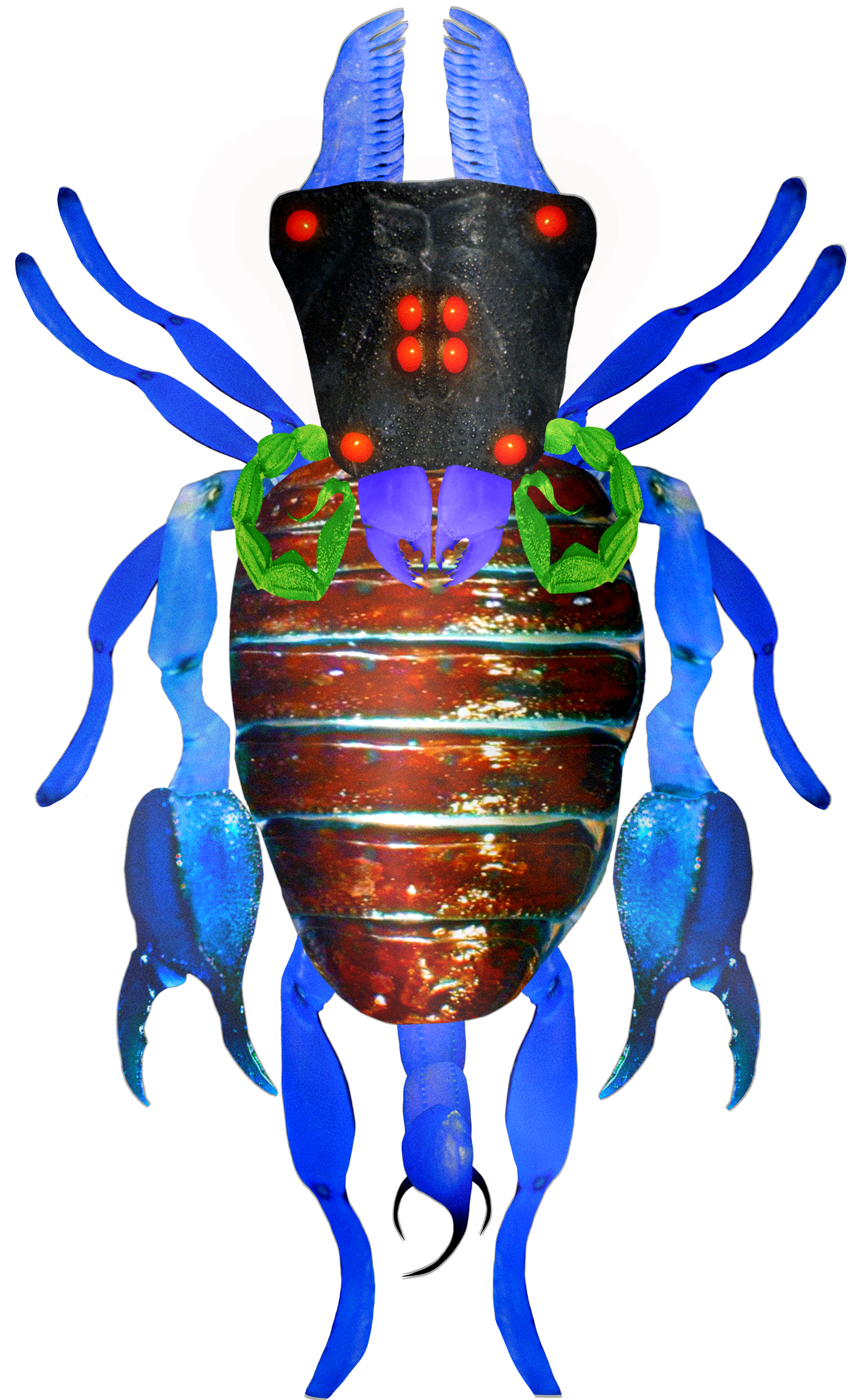
To counter the Xa’sef threat, the Kh’tuk engineered yet another species: the Kh’ona, a scorpion‑human hybrid designed for war, and based on the scorpion species Euscorpius Germanus. The Kh’ona defeated the Xa’sef, but the Kh’tuk, fearing their strength, enslaved them.
This oppression sparked a revolution led by Wo’zidyf, prince of the Kh’tuk city of Th’anzodith. Chosen by the Supreme Compiler, Wo’zidyf sought unity between Kh’tuk, Kh’ona, and humanity.
When the Xa’sef launched a final assault on Th’anzodith, Wo’zidyf freed the Kh’ona. Together they fought, but the city fell. The aftermath ignited a civil war between Wo’zidyf’s reformists and the old regime, led by the Queen.
Wo’zidyf prevailed. The old order collapsed.
After the civil war, the Kh’tuk renounced genetic engineering, and retreated deeper into the Earth. Over centuries, they became a disciplined, introspective civilization dedicated to inner perfection through atonement, stability and the preservation of individuality, in spiritual worship of the Supreme Compiler.
They believe all life to be essential to the function of our universe, which they view as a divine projection, using our own collective consciousness, present in all of our genomes, and expressed through sacred patterns to function. Thus, they no longer seek vengeance. Instead, they observe humanity from afar, influencing through subtle means: dreams, inspiration, and forgotten fragments of ancient knowledge, while dominating the underground.
They wait for the return of the Supreme Compiler — not to conquer the surface, but to rebuild the world alongside humanity as equals, and make up for their sins.
Copyright © 2026 A. H. Graham
All rights reserved.